给定一个数组,它的第 i 个元素是一支给定股票第 i 天的价格。
设计一个算法来计算你所能获取的最大利润。你可以尽可能地完成更多的交易(多次买卖一支股票)。
注意:你不能同时参与多笔交易(你必须在再次购买前出售掉之前的股票)。
示例 1:
1
2
3
4
输入: [7,1,5,3,6,4] 输出: 7 解释: 在第 2 天(股票价格 = 1)的时候买入,在第 3 天(股票价格 = 5)的时候卖出, 这笔交易所能获得利润 = 5-1 = 4 。 随后,在第 4 天(股票价格 = 3)的时候买入,在第 5 天(股票价格 = 6)的时候卖出, 这笔交易所能获得利润 = 6-3 = 3 。
示例 2:
1
2
3
4
5
输入: [1,2,3,4,5] 输出: 4 解释: 在第 1 天(股票价格 = 1)的时候买入,在第 5 天 (股票价格 = 5)的时候卖出, 这笔交易所能获得利润 = 5-1 = 4 。 注意你不能在第 1 天和第 2 天接连购买股票,之后再将它们卖出。 因为这样属于同时参与了多笔交易,你必须在再次购买前出售掉之前的股票。
示例 3:
1
2
3
输入: [7,6,4,3,1] 输出: 0 解释: 在这种情况下, 没有交易完成, 所以最大利润为 0。
提示:
1 <= prices.length <= 3 * 10 ^ 40 <= prices[i] <= 10 ^ 4
来源:力扣(LeetCode)
题解: 本题和121. 买卖股票的最佳时机 大同小异,只不过此次不限制股票购买次数,我们依旧可以用动态规划的思想来解决问题,依旧分为三种情况,买入、休息和卖出,此题的状态转移方程与121. 买卖股票的最佳时机 唯一的不同就是在当天持有股票时最大利润的状态转移方程为T[i][1] = Math.max(T[i - 1][1], T[i - 1][0] - prices[i])。
具体代码如下:
1
2
3
4
5
6
7
8
9
10
11
12
13
14
class Solution public int maxProfit (int [] prices) if (prices.length == 0 ) return 0 ; int [][] T = new int [prices.length][2 ]; T[0 ][0 ] = 0 ; T[0 ][1 ] = -prices[0 ]; for (int i = 1 ; i < prices.length; i++) { T[i][0 ] = Math.max(T[i - 1 ][0 ], T[i - 1 ][1 ] + prices[i]); T[i][1 ] = Math.max(T[i - 1 ][1 ], T[i - 1 ][0 ] - prices[i]); } return T[prices.length - 1 ][0 ]; } }
同样我们可以优化空间复杂度。
具体代码如下:
1
2
3
4
5
6
7
8
9
10
11
12
13
class Solution public int maxProfit (int [] prices) if (prices.length == 0 ) return 0 ; int notHave = 0 ; int have = -prices[0 ]; for (int i = 1 ; i < prices.length; i++) { notHave = Math.max(notHave, have + prices[i]); have = Math.max(have, notHave - prices[i]); } return notHave; } }
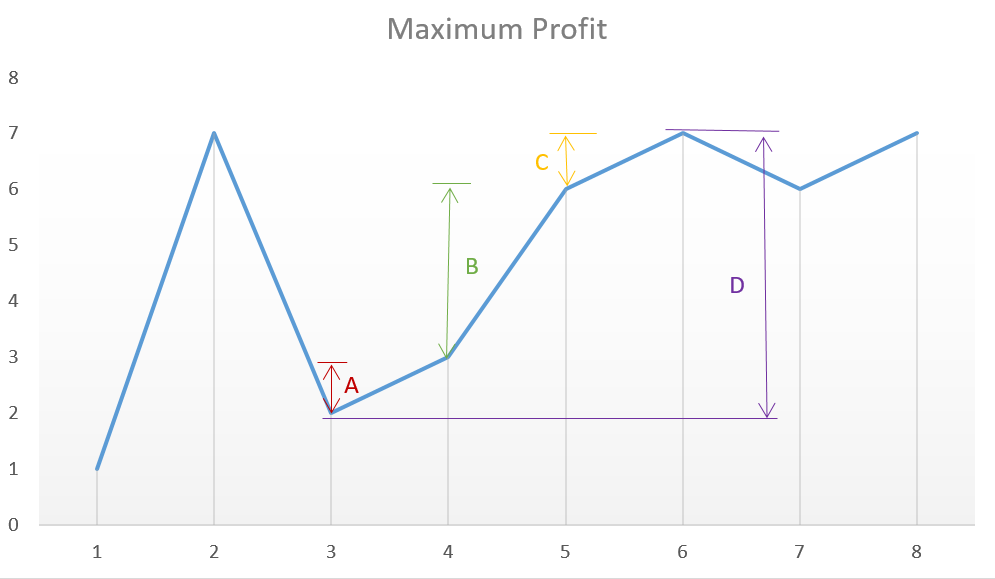
官方给的一次遍历的方法也很棒,具体来说就是,总利润是每个价格上升区间累计值之和,我们只需要遍历一次,将所有利润累计值加起来即可得到结果。
具体代码如下:
1
2
3
4
5
6
7
8
9
10
class Solution public int maxProfit (int [] prices) int maxprofit = 0 ; for (int i = 1 ; i < prices.length; i++) { if (prices[i] > prices[i - 1 ]) maxprofit += prices[i] - prices[i - 1 ]; } return maxprofit; } }